
Common Roof, HVAC, and Water Inspection Mistakes in Southern Nevada Home Buying
Buying a home in the Mojave Desert presents unique challenges that standard inspection checklists often overlook. According to the National Association of Realtors, 67% of buyers' agents reported that home inspections resulted in a request for repairs, renegotiation, or a contract termination. In Southern Nevada, these numbers are driven by extreme environmental factors. The intense sun, dry heat, and occasional monsoon rains create a specific set of vulnerabilities for residential properties. Ignoring these local nuances can lead to costly surprises after closing. This guide details the critical inspection mistakes buyers make regarding roofing, climate control, and water systems in the Las Vegas valley.
Roofing Inspection Errors in Extreme Heat
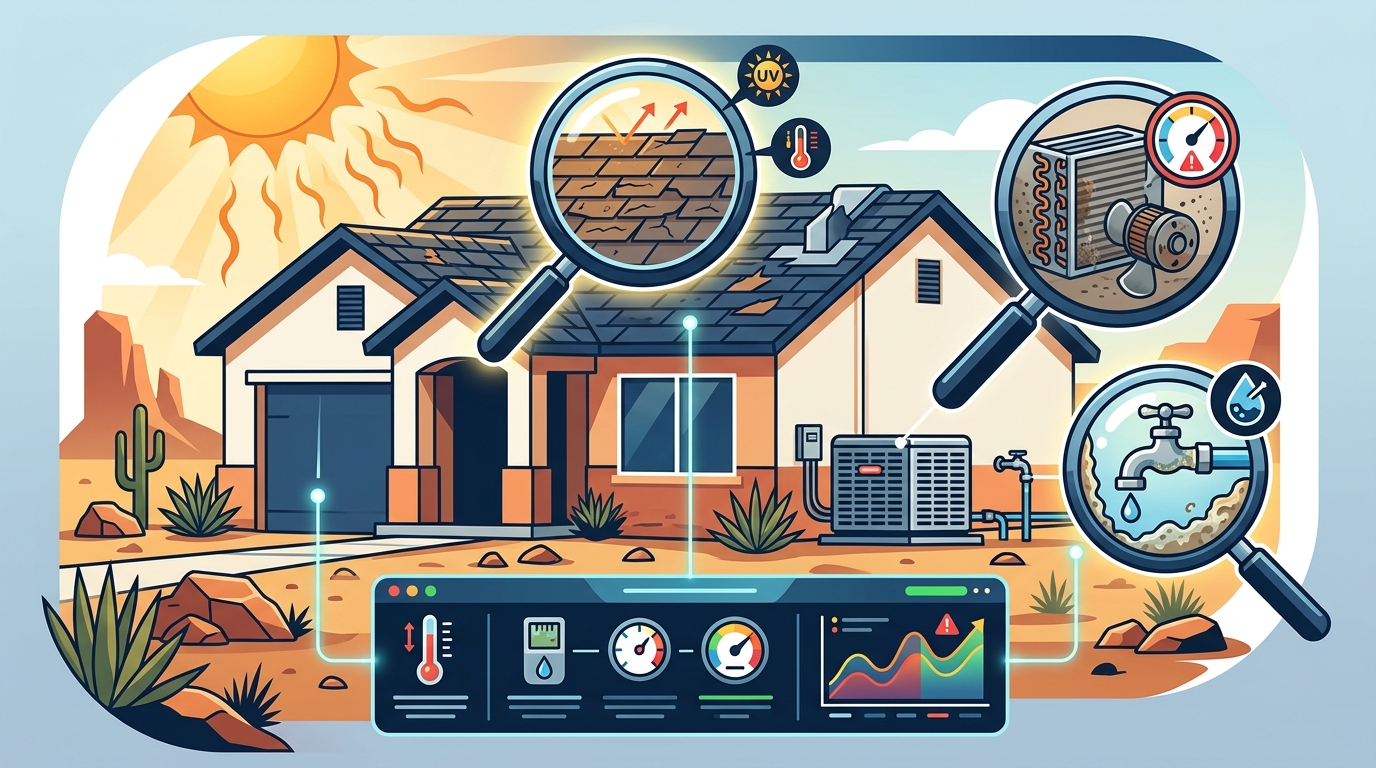
The Southern Nevada sun is relentless. It accelerates the degradation of roofing materials far faster than in temperate climates. Many buyers rely on generalist inspectors who do not understand the specific failure modes of asphalt shingles under UV exposure.
Ignoring Granule Loss and Curling
Asphalt shingles lose their protective granules over time. This process is accelerated by thermal cycling. Inspectors often miss early signs of granule loss in gutters or on the roof surface. Granule loss is the primary indicator of shingle aging. Without these granules, the asphalt underneath is exposed to direct UV radiation. This leads to premature cracking and brittleness. Buyers must look for bare spots on shingles where the matting is visible.
Overlooking Flashing and Sealant Failure
Thermal expansion and contraction cause materials to move. Flashing around chimneys, vents, and skylights is particularly vulnerable. In Las Vegas, the temperature swing between day and night can be drastic. This movement breaks the sealant bonds. Inspectors frequently fail to check the flexibility of these sealants. Failed flashing is a leading cause of roof leaks. Water intrusion here can damage attic insulation and structural wood framing. Buyers should request a detailed look at all penetrations on the roof plane.
Misjudging Roof Age and Remaining Life
Many sellers claim their roof is "new" based on a vague timeline. However, a roof installed ten years ago in Nevada may have the wear of a twenty-year-old roof elsewhere. The UV index in Southern Nevada is consistently high. This degrades the chemical bonds in roofing materials. Buyers should verify the installation date through permits or receipts. Do not rely solely on the inspector's visual estimate of age.
HVAC System Oversights in Desert Climates
Heating, ventilation, and air conditioning systems in Southern Nevada work harder than anywhere else in the country. The cooling load is immense. Standard inspections often miss the cumulative wear on these high-stress systems.
Underestimating Cooling Capacity Requirements
A system that was adequate for a home in a cooler climate may be undersized for Las Vegas. The British Thermal Unit (BTU) requirements are significantly higher. Inspectors rarely calculate the specific cooling load based on square footage, insulation quality, and window exposure. Undersized HVAC units run continuously. This leads to higher energy bills and premature compressor failure. Buyers should ask for the system's tonnage and compare it to the home's size.
Neglecting Ductwork Integrity
Many homes in Southern Nevada have ductwork in unconditioned attics. These attics can reach temperatures exceeding 150 degrees Fahrenheit. Leaky ducts in these spaces waste significant energy. Inspectors often focus on the furnace or air handler but ignore the ducts. Duct leakage can account for 30% of energy loss. Buyers should request a duct leakage test or a thermal imaging scan to identify gaps and disconnections.
Ignoring Filter Maintenance and Airflow
Desert dust and pollen put immense strain on HVAC filters. Clogged filters restrict airflow. This causes the evaporator coil to freeze. It also forces the blower motor to work harder. Inspectors should check the condition of the filter and the airflow at the registers. Poor airflow is a common cause of AC failure. Buyers should ensure the system has been regularly maintained with clean filters.
Water Pressure and Plumbing Pitfalls
Water is a precious resource in Southern Nevada. The plumbing systems in older homes may not be equipped to handle modern demands or the specific water quality issues in the region.
Overlooking Water Pressure Issues
High water pressure can damage pipes and fixtures. Low pressure makes daily tasks frustrating. Inspectors often forget to test pressure at multiple outlets. Ideal water pressure is between 40 and 80 psi. Buyers should request a pressure test during the inspection. If pressure is too high, a pressure reducing valve is needed. If too low, a booster pump may be required.
Ignoring Water Quality and Hardness
Las Vegas water is known for its hardness. High mineral content leads to scale buildup in pipes and appliances. This reduces water flow and shortens the lifespan of water heaters and dishwashers. Inspectors rarely test water quality. Hard water causes significant long-term damage. Buyers should consider a water softener installation. This protects plumbing and appliances from scale buildup.
Misjudging Pipe Material and Age
Older homes in Southern Nevada may have galvanized steel pipes. These pipes corrode from the inside out. They eventually restrict water flow and can leak. Inspectors should identify the pipe material. Galvanized pipes have a limited lifespan. Buyers should budget for a repipe if the pipes are original to the home. Copper or PEX pipes are more durable and resistant to corrosion.
System Comparison and Risk Assessment
The following table summarizes the key risks associated with each major home system in Southern Nevada. Understanding these distinctions helps buyers prioritize their inspection focus.
| System | Primary Risk Factor | Inspection Focus | Typical Repair Cost |
|---|---|---|---|
| Roof | UV Degradation | Granule loss, flashing, sealant | $8,000 - $15,000 |
| HVAC | Thermal Stress | Tonnage, duct leakage, airflow | $5,000 - $12,000 |
| Plumbing | Water Hardness | Pressure, pipe material, scale | $3,000 - $10,000 |
| Exterior | Sun Exposure | Stucco cracks, paint peeling | $2,000 - $8,000 |
Key Takeaways for Southern NV Buyers
- Roof Lifespan: Asphalt shingles in Southern Nevada typically last 10 to 15 years, significantly less than the national average of 20 to 30 years.
- HVAC Efficiency: Systems in Las Vegas run up to 2,500 hours per year for cooling alone, requiring more frequent maintenance than in other regions.
- Water Hardness: Las Vegas water hardness averages 200 to 250 ppm, necessitating water softeners to protect plumbing and appliances.
- Insulation Value: Proper attic insulation is critical for energy efficiency, with R-30 to R-60 recommended for the region.
- Inspection Specialization: General inspectors may miss climate-specific issues; specialized inspections for roof and HVAC are often warranted.
- Contract Contingencies: Always include inspection contingencies that allow for renegotiation based on climate-specific findings.
- Vendor Selection: Choose inspectors familiar with Southern Nevada homes to ensure accurate assessment of local risks.
Frequently Asked Questions
How often should I replace my roof in Las Vegas?
Due to intense UV exposure, asphalt shingle roofs in Las Vegas typically last 10 to 15 years. Metal roofs can last 30 to 50 years. Tile roofs can last 50 years or more. Regular inspections are crucial to identify wear early.
What is the ideal HVAC size for a Southern Nevada home?
HVAC sizing depends on square footage, insulation, and window exposure. A professional load calculation is necessary. Undersized units struggle to cool homes, while oversized units cycle too frequently. Both scenarios reduce efficiency and comfort.
Is water softener installation necessary in Las Vegas?
Yes, due to high water hardness. Hard water causes scale buildup in pipes and appliances. This reduces water flow and shortens appliance lifespan. A water softener protects your plumbing investment and improves water quality.
What should I look for in a home inspector for Southern Nevada?
Look for an inspector with experience in desert climates. They should understand the specific risks of UV degradation, thermal stress, and water hardness. Ask about their inspection process for roofs and HVAC systems.
Can I negotiate roof repairs after inspection?
Yes, you can negotiate repairs or credits based on inspection findings. If the roof is near the end of its life, you may request a replacement credit. This is a common negotiation point in Southern Nevada real estate transactions.
How does desert dust affect HVAC systems?
Desert dust clogs filters and coats coils. This reduces airflow and efficiency. It forces the system to work harder. Regular filter changes and coil cleaning are essential for maintaining system performance.
What are the signs of a leaking roof in Las Vegas?
Signs include water stains on ceilings, damp insulation in the attic, and granules in gutters. Flashing failures around vents and chimneys are common leak sources. Early detection prevents structural damage.
Next Steps for Home Buyers
Navigating the Southern Nevada real estate market requires expert guidance. Berkshire Hathaway HomeServices Nevada Properties offers comprehensive support for home buyers. Our team understands the unique challenges of desert home ownership. We connect you with trusted inspectors and contractors. Contact us today to start your home buying journey with confidence. Let us help you avoid costly inspection mistakes and find your perfect home.