

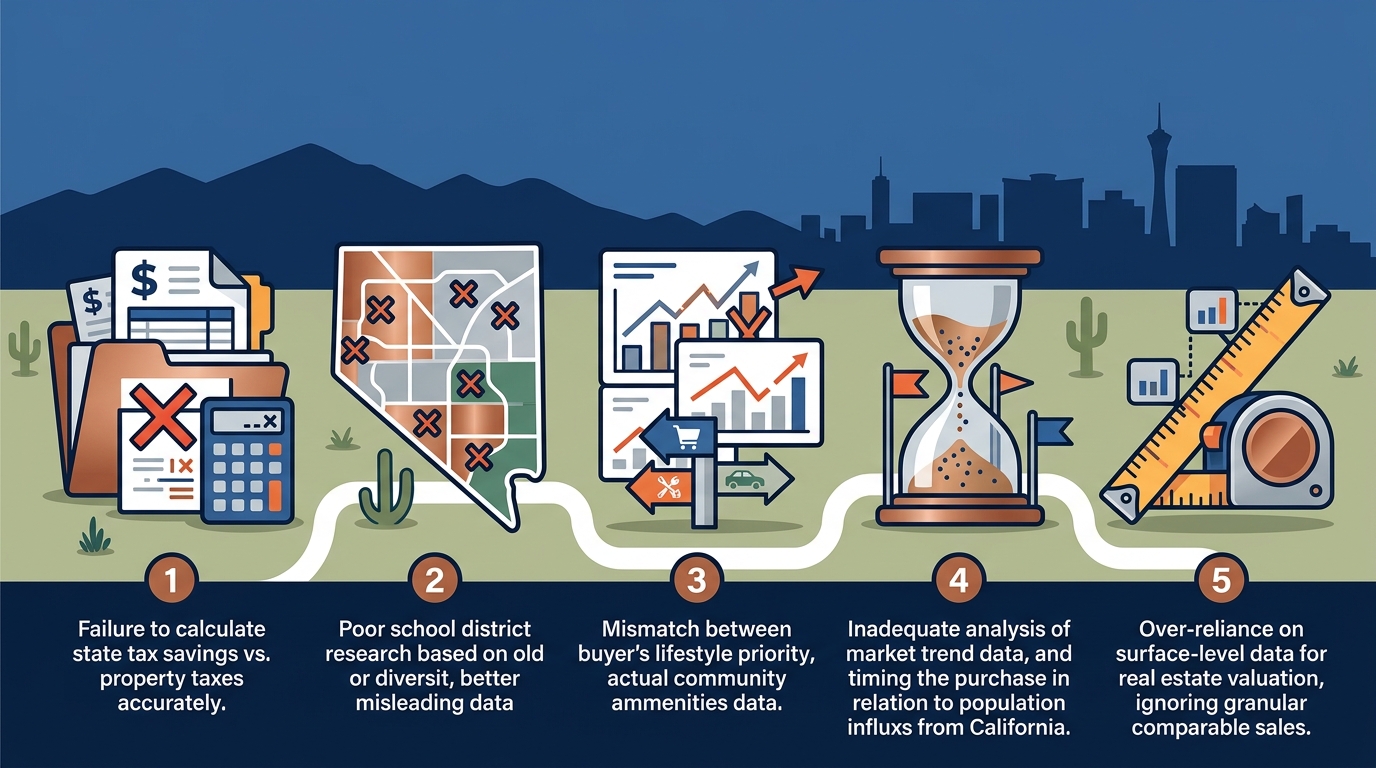
Five Data Mistakes Relocating Buyers Make When Comparing Nevada Neighborhoods
Relocating to the Silver State is a major life event that requires precise data analysis to avoid costly financial missteps. According to the U.S. Census Bureau, Nevada has consistently ranked among the fastest-growing states in the nation, with significant population influxes driven by tax advantages and lifestyle factors. This rapid growth creates a complex real estate landscape where surface-level data can be misleading. Buyers often rely on outdated metrics or ignore critical environmental variables, leading to poor investment decisions. This guide outlines five specific data errors that must be corrected to ensure a successful transition to Nevada living.
Mistake 1: Ignoring Water Rights and Utility Costs
One of the most critical yet overlooked data points for new residents is the cost and reliability of water utilities. Nevada is an arid state where water is a scarce and heavily regulated resource. Many buyers assume that utility costs are standardized across the state, which is factually incorrect. Water rates in Las Vegas, Reno, and rural counties vary significantly based on municipal infrastructure and source availability.
Water is the defining constraint of Nevada real estate. When comparing neighborhoods, you must look beyond the mortgage payment to include monthly utility estimates. In some master-planned communities, water is included in the HOA fees, while in others, it is billed separately by the local municipality. Failing to account for this can result in a monthly budget shortfall that surprises new homeowners within the first year.
For a detailed breakdown of how utility costs impact your overall housing budget, review our comprehensive Nevada relocation guide which includes cost-of-living comparisons.
Mistake 2: Overlooking HOA Restrictions in Master-Planned Communities
Nevada is home to some of the largest master-planned communities in the United States, particularly in the Las Vegas Valley. These communities offer amenities like pools, parks, and security, but they come with strict Homeowners Association (HOA) rules. Buyers often focus on the aesthetic appeal of the neighborhood while ignoring the restrictive covenants that govern property use.
HOA rules can dictate everything from fence height and color to the types of vehicles you can park and whether you can rent out your property. In some cases, these restrictions can severely limit your ability to generate rental income or customize your home. It is essential to request the CC&Rs (Covenants, Conditions, and Restrictions) for any neighborhood you are considering.
Understanding these rules is vital for long-term satisfaction. You can explore our real estate services to find neighborhoods that align with your lifestyle preferences and investment goals.
Mistake 3: Misinterpreting Median Home Prices vs. Actual Inventory
Median home price is a popular metric used in media reports, but it can be highly misleading when evaluating specific neighborhoods. The median price is the midpoint of all homes sold in a given area, meaning half sold for more and half sold for less. It does not reflect the price of the specific type of home you are looking for.
For example, a neighborhood might have a high median price because a few luxury estates were sold, while the majority of inventory consists of modest starter homes. Conversely, a low median price might be skewed by a few foreclosures. Buyers must look at the price per square foot and the list-to-sale price ratio for the specific property type they desire.
To get accurate market data, consult our latest market trends analysis which provides granular data on inventory levels and price fluctuations across different Nevada counties.
Mistake 4: Neglecting Flood Zone and Fire Risk Data
Environmental risks are a critical component of Nevada real estate due to the state's unique geography. Flood zones are not limited to areas near rivers; flash floods can occur in many desert washes, particularly in Las Vegas and Henderson. Additionally, wildfire risk is a growing concern in the foothills and rural areas of Nevada.
Insurance costs for flood and fire coverage can be substantial and are often not included in standard homeowners insurance quotes. Buyers must check FEMA flood maps and wildfire risk assessments for every property. Ignoring these factors can lead to uninsurable properties or prohibitively high insurance premiums that make the home unaffordable.
According to the National Interagency Fire Center, wildfire activity in the western United States has increased significantly in recent years, making risk assessment more important than ever. Learn more about home insurance considerations for Nevada residents to protect your investment.
Mistake 5: Failing to Account for Property Tax Nuances
Nevada is known for having no state income tax, which is a major draw for relocators. However, property taxes are not uniform across the state. Different counties have different mill levies and assessment ratios. Clark County, which includes Las Vegas, has a different tax structure than Washoe County, which includes Reno.
Buyers often assume that property taxes will be low because there is no income tax. In reality, property tax rates can vary by hundreds of dollars per year depending on the county and the specific valuation method used. It is essential to calculate the annual property tax burden for each property you consider to ensure it fits your long-term financial plan.
For a detailed comparison of tax rates across Nevada, visit our county tax comparison resource.
Comparing Nevada Neighborhood Data
The following table summarizes key data points to consider when comparing neighborhoods in Nevada. This overview highlights the variability in costs and restrictions that can impact your decision.
| Factor | Las Vegas Valley | Reno/Sparks Area | Rural Nevada |
|---|---|---|---|
| Primary Water Source | Municipal (Las Vegas Valley Water District) | Municipal or Well | Well or Hauling |
| HOA Prevalence | High in Master-Planned Communities | Moderate | Low to None |
| Flood Risk | Variable (Wash Areas) | Low to Moderate | Low |
| Fire Risk | Moderate in Foothills | High in Foothills | Very High |
| Property Tax Rate | Varies by County | Varies by County | Varies by County |
Key Takeaways
- Water is a critical resource: Always verify water rights and utility costs before purchasing.
- HOA rules matter: Review CC&Rs to ensure they align with your lifestyle.
- Median prices can mislead: Look at specific inventory and price per square foot.
- Environmental risks are real: Check flood and fire zones for insurance implications.
- Taxes vary by county: Calculate the full tax burden for each location.
- Data depth is key: Use comprehensive reports to make informed decisions.
- Professional guidance helps: Work with experts who understand local nuances.
Frequently Asked Questions
What is the average cost of utilities in Nevada?
Utility costs vary by provider and usage, but water is often the most significant variable. It is best to request historical utility bills for any specific property you are considering.
Are HOAs mandatory in all Nevada neighborhoods?
No, but they are common in newer developments. Rural properties often do not have HOAs, while master-planned communities in Las Vegas and Reno typically do.
How do I check flood zones in Nevada?
You can use the FEMA Flood Map Service Center to check the flood zone designation for any specific address in Nevada.
Is Nevada property tax high?
Property tax rates vary by county. It is important to calculate the specific tax burden for each property rather than relying on generalizations.
What is the best time to buy in Nevada?
Market conditions fluctuate, but understanding local inventory levels and seasonal trends can help you time your purchase effectively.
Do I need a local agent to buy in Nevada?
Yes, a local agent can provide critical insights into neighborhood-specific data, HOA rules, and environmental risks that are not available online.
How do I find reliable school district data?
Use resources like GreatSchools or the Nevada Department of Education to compare school performance metrics for different neighborhoods.
Start Your Nevada Relocation Journey
Avoiding these five data mistakes is the first step toward a successful relocation. By focusing on accurate, granular data, you can make informed decisions that protect your investment and enhance your quality of life. Contact Berkshire Hathaway HomeServices Nevada Properties today to connect with a local expert who can guide you through the complexities of the Nevada real estate market.