

The Virginia real estate landscape is defined by its dramatic regional diversity, creating two distinct investment environments within a single state. According to recent housing market reports, the median home price in Northern Virginia often exceeds $600,000, while comparable properties in Southern Virginia frequently remain under $300,000. This significant price disparity is not merely a statistical anomaly but a reflection of differing economic drivers, commute patterns, and lifestyle preferences. Understanding these nuances is critical for anyone looking to buy, sell, or invest in the Old Dominion. (Contact Us)
Economic Drivers and Job Growth
The primary engine of Northern Virginia's real estate market is its proximity to Washington, D.C. This region, often referred to as NoVa, serves as a hub for federal government contractors, technology firms, and international organizations. The presence of major employers like Amazon's HQ2 in Arlington and the massive federal budget creates a high-demand environment for housing. Job stability in Northern Virginia is historically linked to federal spending cycles. This economic foundation supports higher home values and attracts a demographic of professionals seeking career advancement in the public and private sectors.
In contrast, Southern Virginia's economy is more diversified and rooted in traditional industries. Cities like Richmond, Norfolk, and Virginia Beach benefit from a mix of military installations, healthcare systems, and growing tech sectors. While the salary caps may be lower than in the D.C. metro area, the cost of living adjustment makes disposable income more accessible. The economic growth in Southern Virginia is often driven by local innovation hubs and tourism, particularly in the coastal regions. This creates a different type of market resilience, one that is less dependent on federal policy shifts and more on regional economic health.
Housing Inventory and Price Trends
Housing inventory in Northern Virginia is characterized by scarcity and high turnover. The land is limited, and zoning laws in many counties restrict new construction. This scarcity drives up prices, making it a seller's market for most of the year. Homes in areas like Fairfax, Loudoun, and Prince William counties often receive multiple offers within days of listing. The average days on market for a single-family home in these counties is significantly lower than the national average. Buyers must act quickly and be prepared for competitive bidding scenarios.
Southern Virginia offers a more balanced inventory with a wider variety of housing types. From historic row homes in Richmond to waterfront properties in Virginia Beach, the options are extensive. The price per square foot is generally lower, allowing for more square footage for the same budget. New construction is more prevalent in suburban areas of Richmond and Hampton Roads, providing modern amenities and energy-efficient features. This abundance of choice allows buyers to negotiate more effectively, especially in slower seasons. The market dynamics here favor those looking for space and value over proximity to a major capital city.
Lifestyle Differences and Community Vibe
Living in Northern Virginia is often described as fast-paced and convenience-oriented. The commute to D.C. is a defining feature of daily life for many residents. While traffic can be a challenge, the access to world-class dining, cultural institutions, and international airports is unmatched. Suburbs like Alexandria and Reston offer a blend of urban amenities with suburban safety. The community vibe is professional and diverse, with a strong emphasis on education and career networking. Education quality is a primary driver for family relocation to Northern Virginia. Top-rated school districts are a major selling point for families seeking academic excellence for their children.
Southern Virginia provides a slower, more relaxed pace of life. The coastal regions offer beach access, water sports, and a tourist-friendly atmosphere. Inland areas like Charlottesville and Roanoke are known for their scenic beauty, wine country, and outdoor recreation. The community vibe is often more tight-knit and traditional. Residents value privacy, large lots, and a connection to nature. The cost of entertainment and dining is generally lower, allowing for a different kind of leisure lifestyle. For those who prioritize space, outdoor activities, and a less congested environment, Southern Virginia is the clear choice.
Investment ROI and Rental Yields
Real estate investment strategies differ significantly between the two regions. In Northern Virginia, appreciation is the primary driver of returns. Home values have historically grown steadily, outpacing many other national markets. However, the high entry cost means that cash-on-cash returns can be lower initially. Investors often focus on short-term rentals near tourist areas or long-term rentals to young professionals. The rental market is strong, with high demand from government employees and tech workers. Property management costs are also higher due to the premium nature of the services required.
Southern Virginia offers higher rental yields due to the lower purchase price. Investors can acquire multi-family units or single-family homes at a fraction of the cost of NoVa. The rental demand is driven by military personnel, healthcare workers, and students. In cities like Norfolk and Richmond, the vacancy rates are low, ensuring consistent income. Appreciation rates may be slower than in Northern Virginia, but the barrier to entry is much lower. This allows for portfolio diversification and faster equity buildup through cash flow. Investment in Southern Virginia is often viewed as a cash-flow play rather than an appreciation play.
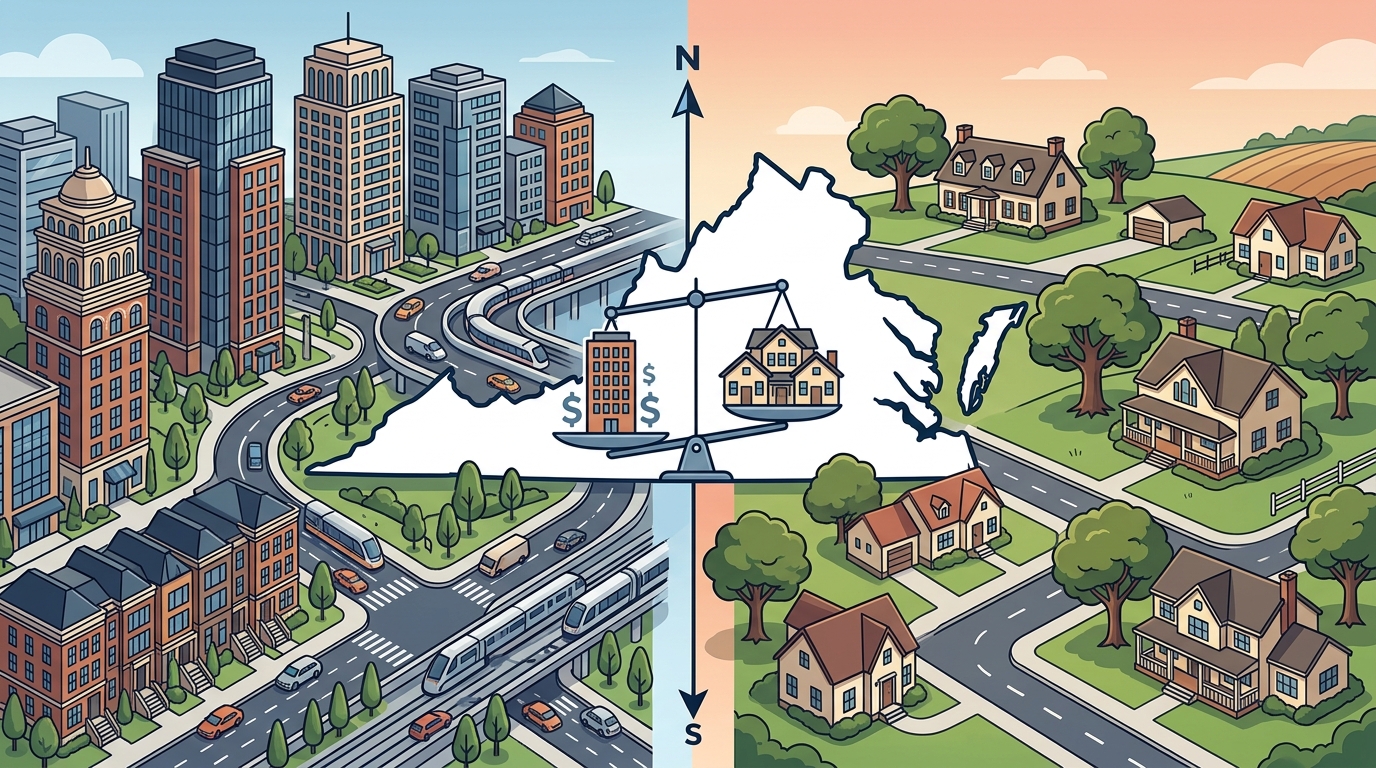
Market Comparison Summary
To help you decide which region aligns with your goals, here is a direct comparison of key market indicators.
| Feature | Northern Virginia | Southern Virginia |
|---|---|---|
| Avg. Home Price | $600,000+ | $300,000 - $400,000 |
| Primary Economic Driver | Federal Government & Tech | Military, Healthcare & Tourism |
| Commute Style | Highway & Metro Rail | Local Roads & Regional Transit |
| Investment Focus | Appreciation & Capital Gains | Cash Flow & Rental Yields |
| Lifestyle Pace | Fast-Paced & Urban | Relaxed & Suburban/Coastal |
Key Takeaways
- Northern Virginia median home prices are consistently higher due to proximity to Washington D.C. and federal employment.
- Southern Virginia offers greater affordability and larger property sizes for the same budget.
- Investment in NoVa focuses on long-term appreciation, while Southern VA focuses on rental cash flow.
- Education quality is a primary driver for family relocation to Northern Virginia.
- Southern Virginia's economy is diversified across military, healthcare, and tourism sectors.
- Housing inventory in Northern Virginia is scarce, leading to competitive bidding wars.
- Coastal communities in Southern Virginia provide unique lifestyle benefits like beach access.
Frequently Asked Questions
Which Virginia market has better appreciation potential?
Northern Virginia has historically shown stronger appreciation rates due to its proximity to the federal government and major tech employers. The limited land supply and high demand continue to drive values upward.
Is Southern Virginia a good place for first-time homebuyers?
Yes, Southern Virginia is often more accessible for first-time buyers due to lower entry prices and a wider variety of housing options. Programs for first-time buyers are also widely available in cities like Richmond and Norfolk.
How do commute times compare between the two regions?
Commutes in Northern Virginia can be lengthy, especially during peak hours to D.C. Southern Virginia commutes are generally shorter and less congested, depending on the specific city and workplace location.
What are the main economic drivers in Southern Virginia?
The main economic drivers include military installations, healthcare systems, higher education institutions, and tourism, particularly in the Hampton Roads area.
Which region is better for rental investment?
Southern Virginia often offers higher rental yields due to lower purchase prices. Northern Virginia may offer better long-term appreciation but lower initial cash flow.
Are there significant tax differences between the regions?
Tax rates vary by county and city in both regions. It is essential to compare specific local property taxes and transfer taxes when evaluating costs in different jurisdictions.
How does the school system compare?
Northern Virginia is renowned for its top-rated public school systems, which is a major factor in home values. Southern Virginia also has strong schools, particularly in affluent suburbs of Richmond and Hampton Roads.
Contact Your Local Experts
Whether you are drawn to the professional energy of Northern Virginia or the relaxed charm of Southern Virginia, making the right move requires expert guidance. At Berkshire Hathaway HomeServices PenFed Realty, we specialize in navigating the complexities of both markets. Our agents have deep local knowledge and can help you find the perfect property that matches your lifestyle and investment goals. Contact us today to schedule a consultation and start your journey to homeownership.