
Your roof is the primary defense against the elements, protecting your family and your largest financial asset from decades of weather exposure. According to the National Association of Realtors, a new roof can recover up to 60% of its cost at resale, making it a critical component of home value preservation. Choosing the wrong material can lead to premature failure, costly repairs, and diminished curb appeal. This guide provides the definitive framework for evaluating roofing systems tailored to your specific geographic and architectural needs. (Contact Us)
Understanding Core Roofing Materials
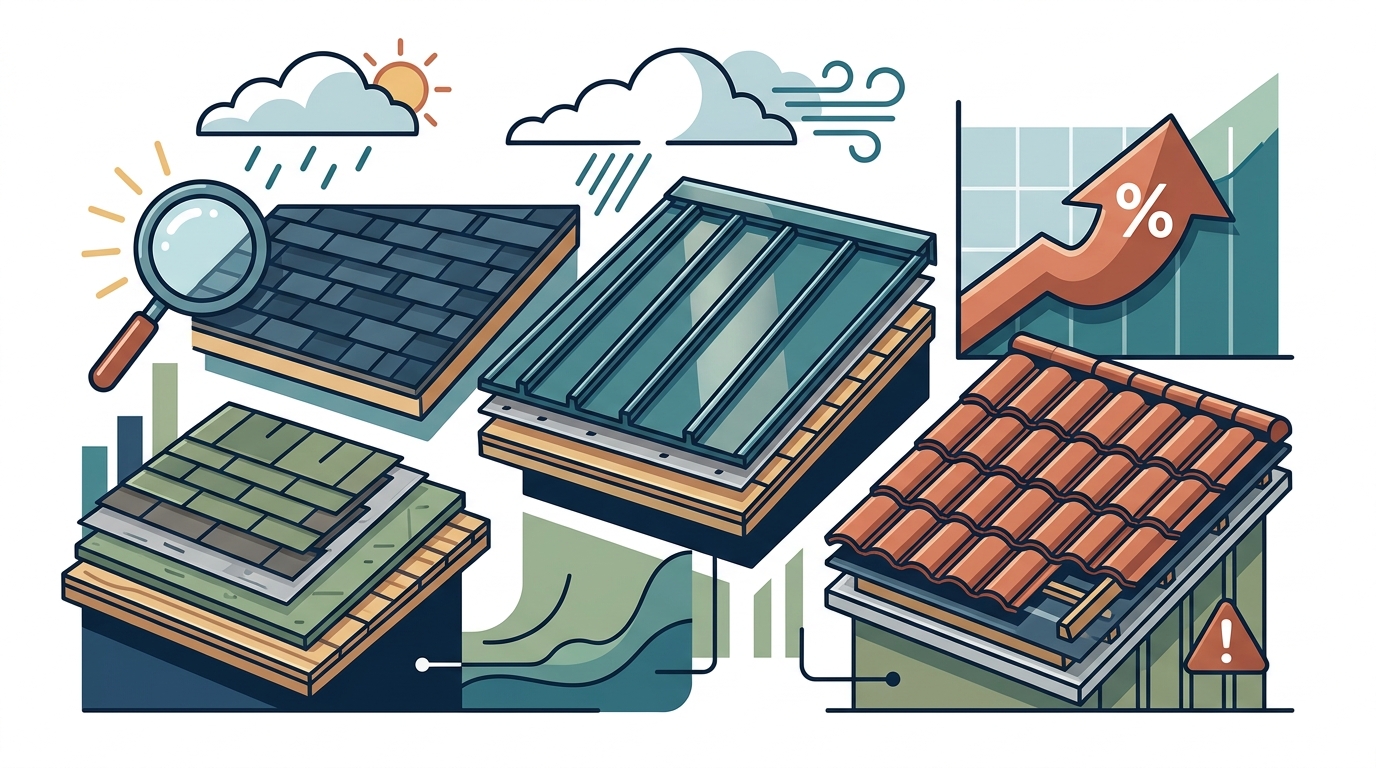
Before committing to a project, you must understand the fundamental differences between available materials. Each option offers distinct advantages regarding durability, aesthetics, and maintenance requirements. Asphalt shingles remain the most popular choice in the United States due to their affordability and ease of installation. Asphalt shingles are a composite material made of a fiberglass or organic mat saturated with asphalt and coated with mineral granules. They provide a reliable balance of cost and performance for most residential properties.
For homeowners seeking longevity and premium aesthetics, architectural shingles offer a significant upgrade. These shingles are thicker and have a dimensional appearance that mimics more expensive materials. Metal roofing has gained substantial market share in recent years due to its exceptional durability and recyclability. Metal roofing is a durable, lightweight roofing system typically constructed from steel, aluminum, or copper panels. It reflects solar radiation effectively, which can significantly reduce cooling costs in warm climates.
Tile and slate roofs represent the pinnacle of longevity and luxury. Clay tile roofs are heavy, fire-resistant, and can last over a century if the underlying structure is sound. Slate is a natural stone product that offers unmatched beauty and a lifespan exceeding 100 years. However, these materials require reinforced roof framing to support their weight. You can explore our detailed roofing services to see how we handle complex material transitions.
Climate Compatibility and Regional Performance
Your geographic location dictates the most suitable roofing system. In regions prone to high winds, such as coastal areas, impact-resistant shingles or metal roofs are essential. According to the Insurance Institute for Business and Home Safety, impact-resistant roofs can reduce wind damage claims by up to 40%. In fire-prone areas, Class A fire-rated materials like metal, tile, or slate are mandatory in many jurisdictions.
Heavy snowfall regions require roofs with steep pitches and smooth surfaces to prevent ice dam formation. Asphalt shingles can perform well in moderate climates but may degrade faster under extreme UV exposure. UV degradation is the process where ultraviolet radiation breaks down the chemical bonds in roofing materials, leading to brittleness and cracking. Homeowners in the Southwest often benefit from cool roof coatings that reflect heat.
Humid climates demand materials that resist mold and algae growth. Metal and tile are naturally resistant to biological growth, whereas asphalt shingles may require algae-resistant granules. Understanding your local weather patterns is crucial for making an informed decision. Visit our roofing tips blog for region-specific advice on maintaining your home's exterior.
Energy Efficiency and Insulation Metrics
Modern roofing is not just about protection; it is about performance. Energy-efficient roofs can lower your utility bills and reduce your carbon footprint. Cool roofing technology uses reflective pigments to bounce sunlight away from the home. According to the U.S. Department of Energy, cool roofs can reduce cooling energy use by 10% to 15% in hot climates.
Proper attic ventilation is equally important. A balanced ventilation system prevents heat buildup in the summer and moisture accumulation in the winter. This extends the life of your roof and improves indoor comfort. Metal roofs often come with integrated ventilation options that enhance airflow. We recommend consulting with our expert team to assess your current ventilation system.
Solar-ready roofs are becoming a standard requirement in new construction. These roofs are designed to accommodate solar panel installation without compromising structural integrity. If you are replacing an older roof, consider installing solar shingles or panels during the replacement process. This maximizes the return on investment for both the roof and the solar system.
Long-Term Cost Analysis and ROI
Initial cost is only one factor in the total cost of ownership. Asphalt shingles have the lowest upfront cost but may need replacement every 15 to 20 years. Metal roofs have a higher initial investment but can last 40 to 70 years with minimal maintenance. Tile and slate roofs have the highest upfront cost but can last 50 to 100 years or more.
| Material | Lifespan | Upfront Cost (per sq. ft.) | Maintenance Level |
|---|---|---|---|
| Asphalt Shingles | 15-20 years | $90-$150 | Low |
| Metal Roofing | 40-70 years | $150-$300 | Very Low |
| Clay Tile | 50-100 years | $300-$600 | Low |
| Slate | 75-150 years | $400-$1,000 | Very Low |
When evaluating ROI, consider the impact on home resale value. A new roof is one of the top improvements that buyers look for. According to Remodeling Magazine's Cost vs. Value Report, a mid-range asphalt shingle roof replacement recovers approximately 60% of its cost at resale. Premium materials like metal or slate can offer higher returns in luxury markets. Contact our sales team for a detailed cost estimate for your specific project.
The Installation Process and Contractor Vetting
The quality of your roof is heavily dependent on the installer. A perfect material installed poorly will fail prematurely. Always verify that your contractor is licensed, insured, and bonded. Look for manufacturers' certifications, which indicate specialized training in specific roofing systems.
Ask for a detailed written estimate that includes materials, labor, disposal, and warranty terms. Beware of lowball bids, which often indicate substandard materials or inexperienced crews. Check references and view past projects to assess workmanship quality. We pride ourselves on transparent communication and superior craftsmanship. Learn more about our company history and commitment to excellence.
Proper underlayment and flashing are critical components of a durable roof. These hidden elements prevent water intrusion at vulnerable points like chimneys, vents, and valleys. Ensure your contractor uses high-quality synthetic underlayment and corrosion-resistant flashing. This attention to detail separates professional installations from amateur jobs.
Key Takeaways
- Material Selection: Asphalt shingles offer affordability, while metal and tile provide superior longevity and energy efficiency.
- Climate Matters: Choose materials rated for your specific weather conditions, such as impact-resistant shingles for windy areas.
- Energy Savings: Cool roofs and proper ventilation can reduce cooling costs by 10% to 15% in hot climates.
- ROI Considerations: A new roof recovers approximately 60% of its cost at resale, with premium materials offering higher returns in luxury markets.
- Contractor Vetting: Verify licenses, insurance, and manufacturer certifications to ensure high-quality installation.
- Hidden Components: Quality underlayment and flashing are as important as the visible roofing material.
- Long-Term Value: Investing in a durable roof reduces long-term maintenance costs and protects home value.
Frequently Asked Questions
How long does a typical asphalt shingle roof last?
A standard asphalt shingle roof typically lasts between 15 and 20 years, depending on climate conditions and maintenance. Architectural shingles can last up to 30 years.
Is metal roofing noisy during rain?
Modern metal roofs installed over solid sheathing and proper underlayment are not noticeably louder than other roofing materials. The noise is often dampened by attic insulation.
What is the best roofing material for fire resistance?
Class A fire-rated materials like metal, clay tile, and slate offer the highest level of fire resistance. These materials are non-combustible and can protect your home from wildfire embers.
Can I install solar panels on an asphalt shingle roof?
Yes, solar panels can be installed on asphalt shingle roofs. However, it is advisable to replace the roof before installing solar panels to avoid future removal and reinstallation costs.
How do I know if my roof needs replacement?
Signs include curling or missing shingles, granules in gutters, daylight visible through the roof boards, and leaks in the attic. Regular inspections can help identify issues early.
What warranty should I expect for a new roof?
Most manufacturers offer 20 to 50-year limited warranties on materials. Contractors typically provide a 5 to 10-year workmanship warranty. Always read the fine print to understand coverage limits.
Does a new roof increase my home's value?
Yes, a new roof is one of the most impactful improvements for home value. It reassures buyers that the home is well-maintained and reduces their immediate maintenance concerns.
Ready to Protect Your Home?
Selecting the right roofing system is a significant investment in your home's future. By understanding the materials, climate compatibility, and long-term costs, you can make a confident decision. Our team at BHHS NV is dedicated to providing superior roofing solutions tailored to your needs. Contact us today to schedule a comprehensive roof inspection and receive a personalized quote. Let us help you choose the best roof for your home and budget.