

Real estate valuation is not a singular science but a convergence of multiple financial models. Among these, cost-based valuation offers a distinct perspective by focusing on the expense of reproduction rather than market comparables. According to the National Association of Realtors, the median existing-home sales price in the United States reached $417,900 in late 2023, highlighting the volatility that makes alternative valuation methods critical for investors and developers. This approach is particularly vital in regions with limited comparable sales or unique property types. Understanding this method allows stakeholders to anchor their expectations in tangible asset value rather than speculative market sentiment. (Contact Us)
What Is Cost-Based Valuation?
Cost-based valuation is a real estate appraisal method that estimates the value of a property by calculating the current cost to replace or reproduce it, minus depreciation, plus the land value. This method operates on the principle of substitution, which states that a prudent buyer will not pay more for a property than the cost of acquiring an equally desirable substitute. It is fundamentally different from the sales comparison approach, which relies heavily on recent transactions of similar homes.
This methodology is often the primary tool for appraising unique properties, such as schools, churches, or new construction where comparable sales data is scarce. For homeowners in Nevada, particularly those with custom-built estates or specialized commercial facilities, this valuation provides a floor for the property's worth. It ensures that the investment in the structure itself is recognized, regardless of short-term market fluctuations.
The Core Formula Explained
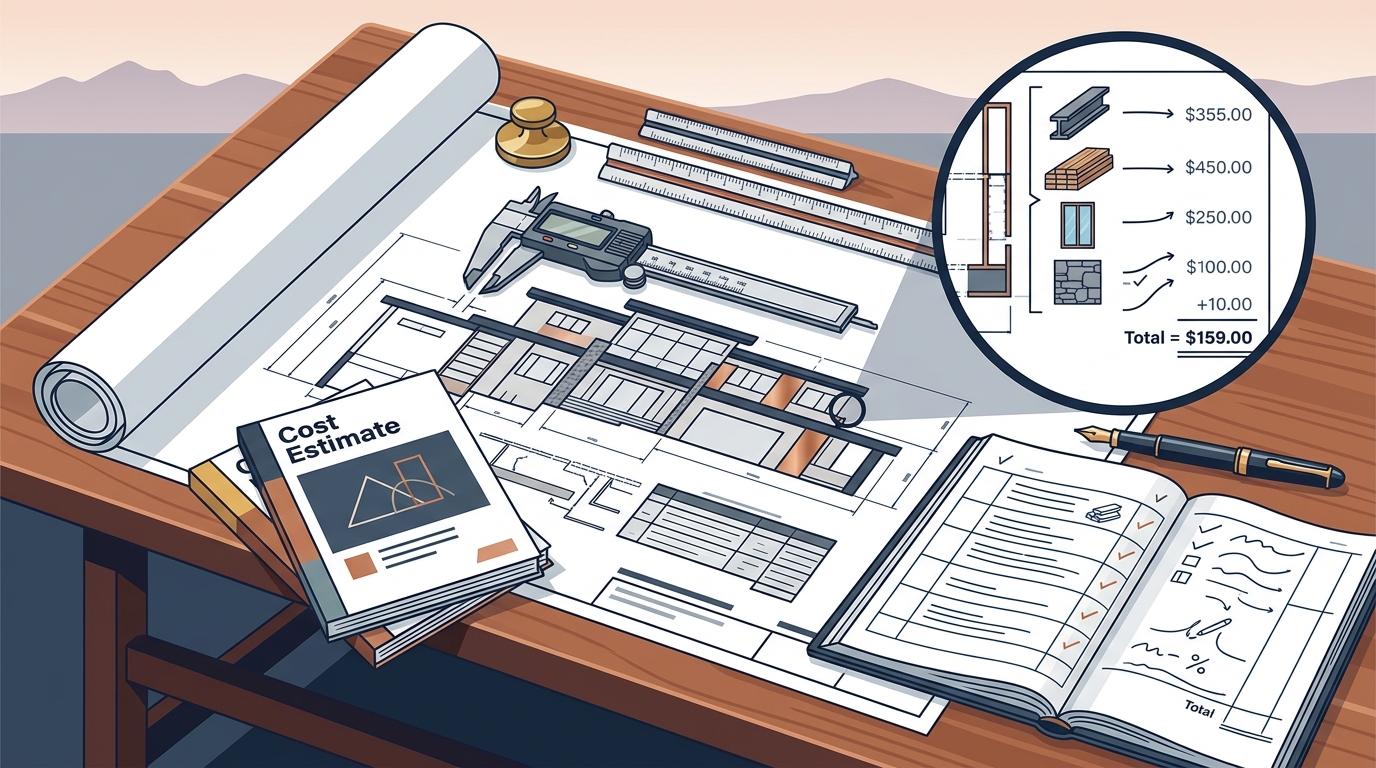
The calculation for cost-based valuation is straightforward but requires precise data inputs. The standard formula is:
Property Value = Land Value + (Cost to Build New - Depreciation)
Each component of this equation requires careful analysis. The land value is typically derived from the sales comparison approach, as land does not depreciate in the same way structures do. The cost to build new involves current construction prices for materials, labor, and overhead. Depreciation is the most complex variable, representing the loss in value from all causes.
Understanding these components is essential for accurate estimation. For instance, in high-inflation environments, construction costs rise rapidly, which can inflate the cost-based value even if market demand is soft. This discrepancy is why appraisers often use this method as a check against other valuation models rather than a standalone definitive price.
Types of Depreciation
Depreciation in real estate is categorized into three distinct types. Recognizing these is crucial for accurate cost-based valuation.
Physical Deterioration
This refers to the wear and tear of the physical structure. It is divided into curable items, such as a worn roof or outdated HVAC systems, and incurable items, such as foundation cracks or structural fatigue. Curable items are subtracted based on their repair cost, while incurable items are estimated based on their impact on utility.
Functional Obsolescence
This occurs when the property's design is outdated relative to current market standards. Examples include poor floor plans, lack of modern amenities, or inefficient energy systems. Functional obsolescence can be curable if upgrades are economically feasible, or incurable if the design flaw is inherent to the structure.
External Obsolescence
This is depreciation caused by factors outside the property boundaries. Noise pollution, proximity to industrial zones, or declining neighborhood demographics contribute to this type. External obsolescence is always incurable by the property owner and significantly impacts the cost-based value.
Applicability in the Nevada Market
Nevada's real estate landscape presents unique challenges for valuation. The state's rapid growth in cities like Las Vegas and Henderson has led to a high volume of new construction. For these new builds, cost-based valuation is highly accurate because the depreciation component is minimal. However, for older properties in historic districts like downtown Las Vegas, the method requires nuanced adjustments for external obsolescence.
According to data from the U.S. Census Bureau, Nevada's population growth has consistently outpaced the national average, driving demand for housing. This demand can sometimes decouple market prices from construction costs, making cost-based valuation a conservative estimate. Investors must weigh the cost of new construction against the premium of existing locations.
Furthermore, regulatory changes in building codes and energy efficiency standards in Clark and Washoe counties affect the "cost to build new" variable. These regulations increase upfront construction costs, which in turn raises the cost-based value of new properties. This dynamic is particularly relevant for developers assessing feasibility.
Comparing Valuation Methods
While cost-based valuation is powerful, it is rarely used in isolation. Below is a comparison of the three primary appraisal approaches.
| Valuation Method | Primary Basis | Best Used For | Limitations |
|---|---|---|---|
| Cost Approach | Replacement cost minus depreciation | New construction, unique properties | Difficult to estimate depreciation accurately |
| Sales Comparison | Recent sales of similar properties | Residential homes, active markets | Requires sufficient comparable data |
| Income Approach | Net operating income capitalization | Rental properties, commercial real estate | Relies on accurate income and expense data |
Each method offers a different lens. The sales comparison approach reflects what buyers are actually paying, while the cost approach reflects what it would cost to recreate the asset. The income approach focuses on the property's ability to generate cash flow. For a comprehensive valuation, professionals often reconcile these three values.
Key Takeaways
- Cost-based valuation calculates value by adding land value to the cost of new construction minus depreciation.
- Depreciation includes physical deterioration, functional obsolescence, and external obsolescence.
- This method is most accurate for new construction and unique properties with few comparables.
- In Nevada, rapid population growth can cause market prices to exceed cost-based values.
- Regulatory changes in building codes directly impact the "cost to build new" variable.
- The cost approach is often used as a check against the sales comparison and income approaches.
- Accurate depreciation estimation requires detailed knowledge of local construction and market trends.
Frequently Asked Questions
Is cost-based valuation accurate for older homes?
It is less accurate for older homes because estimating depreciation becomes increasingly difficult as the property ages. Physical wear and functional obsolescence are harder to quantify precisely, leading to wider margins of error.
How does land value fit into cost-based valuation?
Land value is added separately because land does not depreciate. It is typically determined using the sales comparison approach, analyzing recent sales of vacant lots in the same area.
When is the cost approach preferred over sales comparison?
The cost approach is preferred when there are no comparable sales, such as for special-purpose properties like schools, churches, or government buildings. It is also used for new construction where depreciation is negligible.
What is functional obsolescence?
Functional obsolescence is a loss in value due to outdated design or features that no longer meet current market standards, such as a home with only one bathroom or poor energy efficiency.
Can cost-based valuation predict future market value?
Not directly. It reflects the current cost of reproduction, not future market sentiment. Market value is influenced by supply and demand, which may diverge from construction costs.
How do construction cost indices affect valuation?
Construction cost indices provide data on the price of labor and materials. Rising indices increase the "cost to build new" component, thereby increasing the cost-based value of the property.
Why is external obsolescence incurable?
External obsolescence is caused by factors outside the property, such as noise or pollution. The owner cannot fix these issues, so the loss in value is permanent and must be subtracted.
Contact Us for Expert Valuation
Navigating the complexities of real estate valuation requires local expertise and precise data analysis. Whether you are a homeowner seeking to understand your equity or an investor evaluating a development opportunity, professional guidance is essential. BHHS Nevada Properties offers comprehensive real estate services tailored to the Nevada market. Our team of certified appraisers and agents can help you determine the true value of your property using multiple valuation methods. Contact us today to schedule a consultation and gain clarity on your real estate assets. We are committed to providing transparent, data-driven insights to support your financial goals. Visit our about page to learn more about our history and commitment to excellence in the industry.