

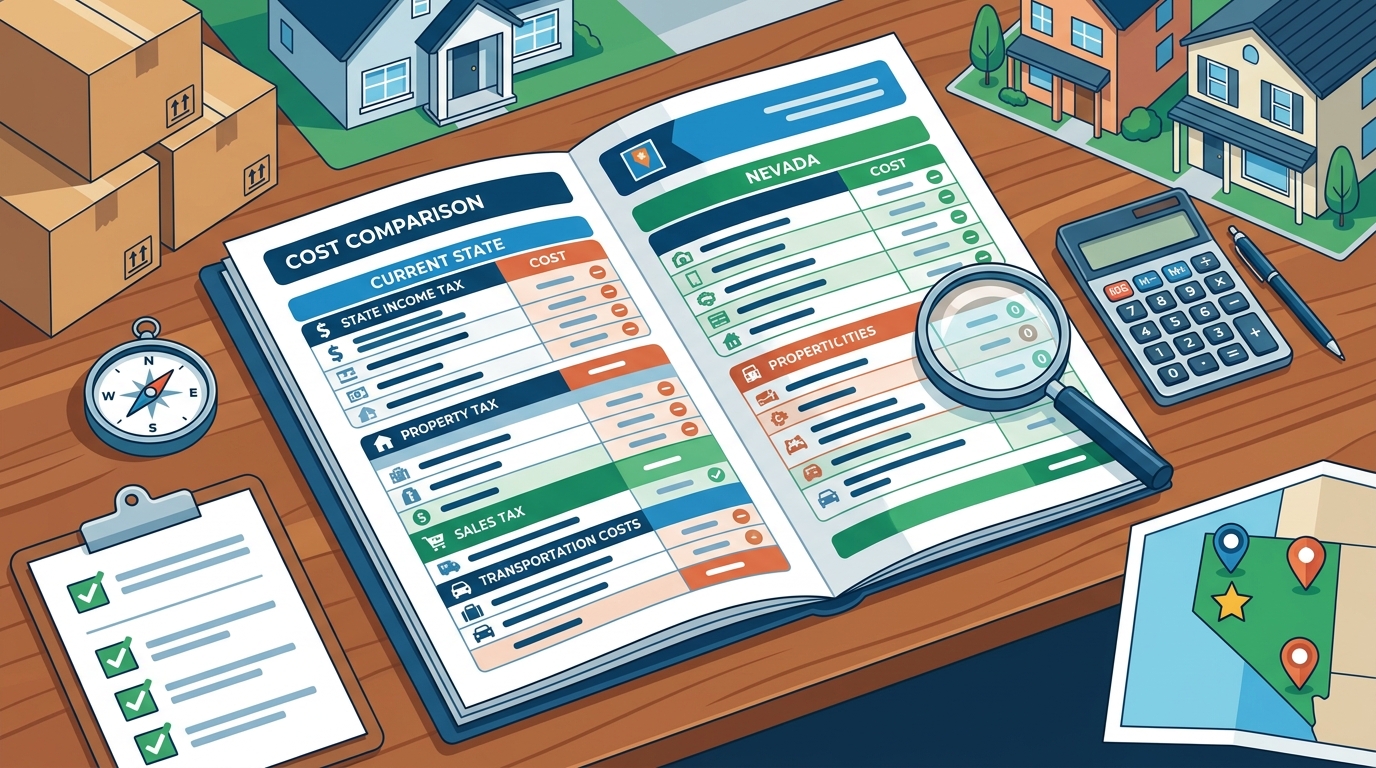
Relocating Buyer's Cost Comparison Worksheet for Nevada Properties
Moving to a new state is rarely just about swapping zip codes. It is a complex financial restructuring that impacts your long-term wealth. According to recent migration data, Nevada has consistently ranked among the top destinations for domestic relocation due to its lack of state income tax. This fiscal advantage attracts over 100,000 new residents annually, yet many buyers underestimate the hidden costs of transition. Understanding the true cost of living difference between your current home and your future Nevada address is critical for accurate budgeting. (Contact Us)
Understanding Nevada Tax Advantages
The primary driver for most relocation decisions is the tax structure. Nevada operates without a state personal income tax. This means your salary, wages, and investment gains remain untouched by state levies. For high-earning professionals, this can result in significant annual savings compared to neighbors in California or New York.
However, the absence of income tax is offset by other revenue mechanisms. Nevada relies heavily on sales tax and property tax structures that differ from other regions. Property tax rates in Nevada are generally lower than the national average, but the assessment process requires careful attention. The state uses a unique system for valuing land versus improvements, which affects your annual tax bill.
When comparing costs, you must also look at corporate taxes if you are self-employed. Nevada offers a favorable business environment with no corporate income tax for most entities. This makes it an attractive hub for entrepreneurs and small business owners looking to reduce operational overhead. (About)
Housing Cost Comparison
Housing is typically the largest expense in any relocation budget. In Nevada, the market is highly segmented. The Las Vegas metropolitan area offers more affordable entry points compared to the Reno-Sparks corridor or the luxury markets of Summerlin and Henderson.
According to recent housing market reports, median home prices in Las Vegas have seen steady appreciation. While still more affordable than many coastal cities, prices have risen due to increased demand. Buyers must compare the purchase price against their previous home's equity. The gap between these two values will determine your initial cash requirement.
It is essential to calculate the cost per square foot for comparable homes in your target neighborhood. This metric provides a clearer picture of value than the total listing price alone. Analyzing local market trends helps you identify neighborhoods with strong appreciation potential.
Down Payment and Closing Costs
Relocating buyers often face higher upfront costs. You must account for closing costs, which typically range from 2% to 5% of the loan amount. In Nevada, transfer taxes are imposed by both the county and the city. These fees vary significantly between Clark County and Washoe County.
Ensure you have a detailed estimate from a local lender. Professional mortgage guidance can help you navigate these specific regional fees and secure the best rate for your new financial situation.
Utility and Infrastructure Costs
Living in the desert comes with specific utility challenges. Electricity costs in Nevada are among the highest in the nation. The climate demands heavy air conditioning use during the long, hot summers. This can drastically increase your monthly budget compared to a temperate climate.
Water usage is another critical factor. Nevada is an arid state with strict water rights laws. Understanding water rights and usage is vital for homeowners, especially those considering properties with large yards or swimming pools. Some communities have restrictions on turf grass to conserve water.
Internet and cable services are generally reliable in major urban areas. However, rural parts of the state may have limited high-speed options. Verify connectivity before signing a lease or purchase agreement if you work remotely.
Insurance and Regulatory Fees
Homeowners insurance in Nevada can be more expensive than the national average. The risk of wildfires, flash floods, and extreme heat drives up premiums. Buyers should obtain quotes from multiple insurers before making an offer.
Vehicle registration fees also differ. Nevada charges a substantial annual fee based on the vehicle's value. This is a recurring cost that many out-of-state buyers overlook. Tips for relocating to Nevada include budgeting for these specific regulatory costs.
Healthcare and Education Costs
Healthcare costs in Nevada are comparable to the national average. However, access to specialized care may vary depending on your location. Las Vegas and Reno have major medical centers, but rural residents may need to travel for certain treatments.
Education costs are another consideration. Nevada has public school districts that vary in quality. Property taxes often fund local schools, so understanding the tax-to-service ratio is important for families.
Comparative Cost Table
The following table illustrates the estimated monthly costs for a typical household relocating to Nevada from a high-tax state. These figures are averages and will vary based on lifestyle and location.
| Expense Category | High-Tax State (Est.) | Nevada (Est.) | Monthly Difference |
|---|---|---|---|
| State Income Tax | $1,200 | $0 | +$1,200 |
| Home Insurance | $150 | $250 | -$100 |
| Electricity | $180 | $350 | -$170 |
| Property Tax (Annualized) | $400 | $250 | +$150 |
| Total Monthly Impact | Baseline | Net Savings | +$1,080 |
As shown, the savings from no income tax often outweigh the higher utility and insurance costs. This net positive impact is a key financial benefit of relocating to the Silver State.
Key Takeaways
- Nevada has no state personal income tax, offering significant savings for high earners.
- Electricity costs are among the highest in the US due to extreme summer temperatures.
- Property taxes are lower than the national average but vary by county.
- Homeowners insurance premiums are higher due to wildfire and flood risks.
- Water usage restrictions are common in arid regions of the state.
- Vehicle registration fees are substantial and based on vehicle value.
- Relocating buyers should budget for higher upfront closing costs and transfer taxes.
Frequently Asked Questions
How much does it cost to relocate to Nevada?
The cost varies based on your origin state and destination. While you save on income tax, you may face higher moving costs and utility bills. A detailed worksheet helps clarify these variables.
Is Nevada cheaper than California?
Generally, yes. The lack of income tax and lower property taxes often result in lower overall living costs, despite higher insurance and utility prices.
What are the biggest hidden costs in Nevada?
Electricity bills during summer months and vehicle registration fees are often underestimated by new residents.
Do I need to pay property tax in Nevada?
Yes, all property owners pay annual property taxes. However, the rates are generally lower than in many other states.
How do I compare housing costs accurately?
Use a cost comparison worksheet that includes purchase price, closing costs, insurance, utilities, and taxes for a true apples-to-apples comparison.
Are there water restrictions in Nevada?
Yes, many areas have strict water conservation rules, especially regarding landscaping and pool maintenance.
What is the best time to buy a home in Nevada?
Market conditions fluctuate, but spring and fall often offer balanced inventory and pricing opportunities.
Start Your Nevada Relocation
Relocating to Nevada is a major financial decision that requires careful planning. Use this cost comparison worksheet to evaluate your options accurately. Partnering with local experts ensures you understand every nuance of the market.
Contact BHHS Nevada Properties today to begin your journey. Our team provides comprehensive support for all your real estate needs, from initial consultation to closing day.