

Homeowners in the Las Vegas Valley are navigating a market that has shifted significantly from the pandemic-era frenzy. According to recent market analyses, the average days on market for single-family homes in Clark County has stabilized, indicating a return to balanced conditions where preparation is paramount. Selling your property now requires more than just listing it; it demands strategic pricing, rigorous disclosure compliance, and expert negotiation. This guide outlines the exact workflow to maximize your net proceeds while avoiding costly legal pitfalls specific to Nevada real estate law.
Step 1: Property Assessment and Valuation
The foundation of a successful sale is an accurate price point. Overpricing is the most common error sellers make, leading to stagnation and eventual price reductions that signal distress to buyers. In the Las Vegas market, neighborhood dynamics vary wildly. A home in Summerlin may have different valuation drivers than one in Henderson or North Las Vegas.
Comparative Market Analysis (CMA)
A Comparative Market Analysis is not merely a computer-generated estimate. It is a deep dive into recent sales of comparable properties, known as "comps," within a one-mile radius. Agents analyze square footage, lot size, view, condition, and days on market for those comps. This data helps establish a realistic listing price that attracts serious buyers immediately.
Understanding Nevada Disclosures
Before you even list, you must understand your legal obligations. Nevada is a disclosure state. Sellers must provide a Seller's Property Disclosure Statement detailing known defects. Failure to disclose material facts can lead to post-closing lawsuits. This includes issues with the roof, foundation, plumbing, and any unpermitted additions. Transparency builds trust and prevents deals from falling apart during the inspection phase.
Step 2: Pre-Listing Preparation and Repairs
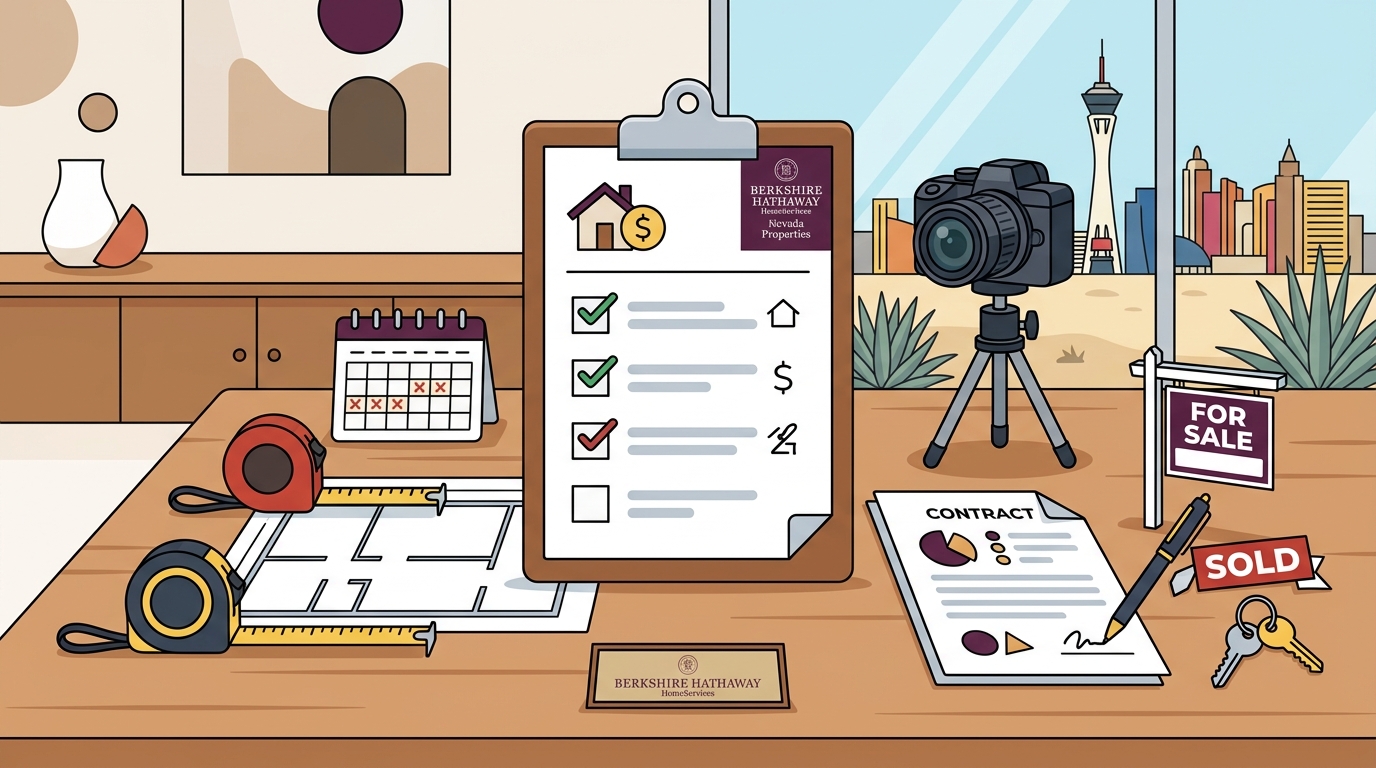
Once the price is set, the physical presentation of the home becomes critical. Las Vegas buyers are often relocating from colder climates or other states, so they need to visualize themselves in the space. Professional staging and photography are not luxuries; they are necessities in a competitive inventory environment.
Essential Repairs and Upgrades
Not every repair yields a return on investment. Focus on high-impact, low-cost improvements. This includes fresh neutral paint, updated lighting fixtures, and landscaping maintenance. In the desert climate, a healthy lawn and mature trees add significant curb appeal. Conversely, avoid major renovations like kitchen remodels unless the current kitchen is severely outdated, as these rarely recoup 100% of their cost in the resale market.
Professional Photography and Virtual Tours
Over 90% of home buyers start their search online. High-resolution photography and virtual tour capabilities ensure your property stands out in search results. Poor lighting or cluttered photos can cause buyers to scroll past your listing entirely. Professional media creates an emotional connection before the buyer ever steps through the door.
Step 3: Strategic Marketing and Exposure
Listing on the Multiple Listing Service (MLS) is just the beginning. A comprehensive marketing plan leverages multiple channels to reach both local and out-of-state buyers.
Digital Marketing Channels
Your agent should utilize social media advertising, email campaigns, and targeted digital ads to promote your listing. Platforms like Facebook and Instagram allow for demographic targeting, ensuring your home is seen by potential buyers in specific income brackets or geographic locations. Additionally, syndication to major portals like Zillow, Realtor.com, and Redfin maximizes visibility.
Open Houses and Private Showings
While open houses are less effective for finding the buyer than they used to be, they are valuable for generating agent feedback. Private showings, however, are where the actual negotiations begin. Ensuring your home is "show-ready" at all times reduces friction and keeps the momentum of interest high.
Step 4: Reviewing and Negotiating Offers
When offers start coming in, the real work begins. It is not just about the highest price. You must evaluate the buyer's financial strength, contingencies, and proposed closing timeline.
Evaluating Offer Strength
A higher offer with many contingencies is often riskier than a slightly lower offer with strong terms. Key factors include the size of the earnest money deposit, the type of financing (conventional vs. FHA vs. Cash), and the buyer's pre-approval status. Cash offers typically close faster and with fewer hurdles, making them attractive even if the price is slightly lower.
Negotiation Tactics
Your agent will act as a buffer between you and the buyer. They will negotiate repairs, credits, and closing costs based on the inspection report. In a balanced market, sellers often agree to a portion of the closing costs or provide a home warranty to sweeten the deal. Understanding the local norms in Clark County is essential for successful negotiation.
Step 5: The Closing Process in Nevada
Once the offer is accepted and contingencies are satisfied, the transaction moves to closing. Nevada uses a title company to facilitate the closing process, which is different from states that use attorneys.
The Title Search and Insurance
The title company conducts a search to ensure there are no liens or encumbrances on the property. They also issue title insurance to protect the buyer and the lender. This step is crucial for clearing any legal hurdles before ownership transfers.
Final Walkthrough and Funding
The buyer will conduct a final walkthrough to ensure the property is in the agreed-upon condition. Once the lender clears the loan, funds are wired to the title company. The deed is recorded with the county, and keys are handed over. This process typically takes 30 to 45 days from contract acceptance to closing.
Key Takeaways
- Accurate Pricing: Overpricing leads to stagnation. Use a detailed CMA to set a competitive price.
- Full Disclosure: Nevada law requires detailed disclosure of known defects to avoid post-closing liability.
- Professional Media: High-quality photos and virtual tours are essential for online visibility.
- Offer Evaluation: Prioritize buyer financial strength and contingency terms over the highest price.
- Local Expertise: Clark County market dynamics vary by neighborhood; local knowledge is critical.
- Timeline Management: Expect a 30-45 day closing period from contract acceptance.
- Agent Selection: Choose an agent with a proven track record in your specific Las Vegas neighborhood.
Frequently Asked Questions
How long does it take to sell a house in Las Vegas?
The average time to sell a home in Las Vegas varies by market conditions but typically ranges from 30 to 60 days from listing to contract, plus another 30 to 45 days for closing. Homes priced correctly and in good condition sell faster.
Do I need to disclose water damage in Nevada?
Yes. Nevada is a disclosure state. You must disclose any known water damage, leaks, or previous flooding issues on the Seller's Property Disclosure Statement. Hiding such information can lead to legal action after the sale.
What are the closing costs for a seller in Las Vegas?
Sellers in Nevada typically pay between 1% and 3% of the sale price in closing costs. This includes title insurance, escrow fees, and real estate commissions. The exact amount depends on the sale price and local title company rates.
Can I sell my house without a real estate agent?
Yes, you can sell by owner (FSBO). However, navigating contracts, disclosures, and negotiations without professional help can be risky. Most sellers find that the expertise of an agent results in a higher net sale price.
What is the average commission for selling a home in Las Vegas?
Real estate commissions are negotiable. The traditional model involves a total commission of 5% to 6%, split between the listing and buyer's agents. However, many agents now offer flat-fee or reduced-commission structures.
How do I choose the right real estate agent in Las Vegas?
Look for an agent with recent sales experience in your specific neighborhood. Check their reviews, ask about their marketing plan, and ensure they have a strong understanding of local disclosure laws.
What happens if the home inspection reveals issues?
If the inspection reveals significant problems, you can negotiate repairs, offer a credit, or adjust the price. You are not obligated to make every repair requested, but ignoring major issues can cause the deal to fall apart.
Contact BHHS Nevada Properties
Selling your home in Las Vegas is a significant financial decision that requires precision and local expertise. BHHS Nevada Properties offers comprehensive services to guide you through every step of the process, from initial valuation to closing day. Our team understands the unique nuances of the Clark County market and is dedicated to maximizing your return on investment.
Ready to start your selling journey? Contact BHHS Nevada Properties today to schedule a private consultation and discover your home's true market value.