

The Nevada real estate market remains one of the most dynamic in the United States, offering homeowners significant opportunities for profit. According to recent market data, the average home in Las Vegas has seen substantial value appreciation over the last decade, making the timing for sellers often favorable. However, navigating the complexities of a transaction in Clark County requires more than just listing a price. It demands a strategic approach to preparation, marketing, and negotiation. This guide outlines the essential steps to ensure your property sells efficiently and at the best possible value. (Nevada Properties Blog 8211)
Step 1: Determine Your Home's True Market Value
The foundation of a successful sale is an accurate pricing strategy. Overpricing a home is a common mistake that leads to stagnation, while underpricing leaves money on the table. In the Nevada market, pricing must reflect hyper-local trends rather than broad state averages.
Understanding Comparative Market Analysis
A Comparative Market Analysis (CMA) is the primary tool used by agents to determine value. This process involves reviewing recently sold properties in your immediate neighborhood that are similar in size, age, and condition. Accurate pricing is critical to attracting serious buyers. For instance, a home in Henderson may command a different price per square foot than a comparable property in North Las Vegas due to differences in school districts and community amenities.
Current Market Dynamics
According to industry reports, inventory levels in Las Vegas fluctuate significantly throughout the year. During peak seasons, demand often outpaces supply, allowing for competitive bidding. Conversely, in slower months, pricing must be more aggressive. Understanding these cycles helps sellers set realistic expectations for their timeline and final sale price.
Step 2: Prepare Your Property for Showings
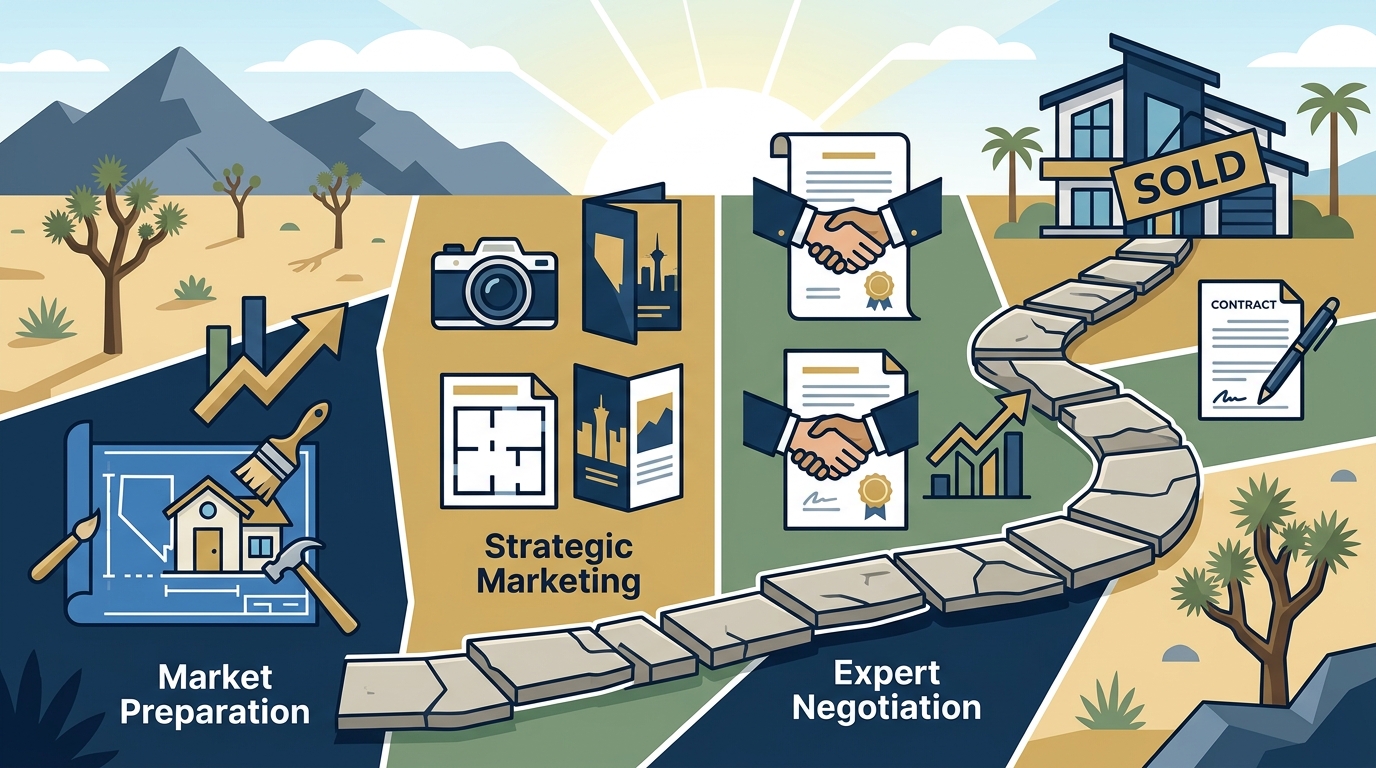
Once the price is set, the physical presentation of your home becomes the next priority. Nevada buyers are often looking for low-maintenance lifestyles, particularly given the arid climate. Preparing your home involves both interior staging and exterior landscaping.
Interior Staging and Repairs
Decluttering is the first step in staging. Remove personal items and excess furniture to help buyers visualize themselves in the space. Minor repairs, such as fixing leaky faucets or patching holes in walls, can prevent buyers from using these issues as leverage for lower offers. Curb appeal is the first impression you make on potential buyers.
Landscaping for the Desert Climate
In regions like Pahrump and Boulder City, water conservation is a major concern. Buyers are increasingly interested in homes with drought-tolerant landscaping, such as succulents, rocks, and artificial turf. Updating your outdoor space to be water-wise not only reduces utility costs for the new owner but also aligns with local sustainability trends. Homes with well-maintained, modern outdoor living spaces often sell faster because they extend the usable square footage of the property.
Step 3: Implement a Targeted Marketing Strategy
Listing your home on the Multiple Listing Service (MLS) is necessary, but it is not sufficient. A comprehensive marketing plan ensures your property reaches the widest possible audience of qualified buyers.
Digital Presence and Virtual Tours
High-quality photography and virtual tours are non-negotiable in today's market. Most buyers begin their search online, often filtering by specific neighborhoods like Summerlin or Anthem. Professional photos highlight the best features of your home, while virtual tours allow out-of-state buyers to explore the property remotely. This is particularly important for Nevada, which attracts many relocating buyers from California and other western states.
Community-Specific Marketing
Marketing should also target specific community interests. For example, luxury homes in Henderson may be marketed toward golf enthusiasts, while properties in Las Vegas might highlight proximity to entertainment and dining. Tailoring the messaging to the lifestyle of the target demographic increases engagement and interest.
Step 4: Evaluate and Negotiate Offers
When offers begin to come in, the negotiation phase starts. This is where experience and local knowledge become invaluable. Nevada is a disclosure-heavy state, and understanding the legal requirements for selling your home is crucial to avoiding post-contract disputes.
Reviewing Offer Terms
Price is not the only factor. Sellers must evaluate the buyer's financing, contingencies, and proposed closing timeline. A slightly lower offer with a cash buyer and no contingencies may be more valuable than a higher offer with a complex loan approval process. Understanding buyer financing is key to a smooth transaction.
Negotiation Tactics
Effective negotiation involves responding to counteroffers strategically. This may include adjusting the price, offering credits for repairs, or changing the closing date to accommodate the buyer's needs. Working with an experienced agent ensures that you do not concede too much on price while protecting your interests in other areas.
Step 5: Navigate the Closing Process
Once an offer is accepted, the clock starts ticking toward closing. In Nevada, the closing process typically involves a title company and an escrow agent who handle the transfer of funds and deeds.
Inspections and Appraisals
The buyer will likely order a home inspection and an appraisal. If the appraisal comes in lower than the agreed price, negotiations may need to resume. Similarly, if the inspection reveals significant issues, you may need to make repairs or offer a credit. Being prepared for these outcomes helps keep the transaction on track.
Final Walkthrough and Closing
Before closing, the buyer will conduct a final walkthrough to ensure the property is in the agreed-upon condition. On closing day, you will sign the necessary documents to transfer ownership. Once the deed is recorded with Clark County, the sale is complete, and you receive your proceeds.
Key Takeaways
- Accurate Pricing: Use a detailed CMA to price your home based on recent sales in your specific neighborhood, not just general market trends.
- Preparation Matters: Invest in staging and drought-tolerant landscaping to appeal to the Nevada lifestyle and buyer preferences.
- Marketing Reach: Leverage virtual tours and high-quality photography to attract both local and out-of-state buyers.
- Negotiation Strategy: Evaluate all offer terms, including financing and contingencies, not just the price.
- Local Expertise: Work with an agent who understands the nuances of Clark County and regional regulations.
- Disclosure Compliance: Ensure all required Nevada property disclosures are completed accurately to avoid legal issues.
- Timing: Consider seasonal market fluctuations when deciding when to list your home for maximum exposure.
Frequently Asked Questions
How long does it take to sell a home in Nevada?
The average time to sell a home in Nevada varies by market conditions, but it typically ranges from 30 to 60 days from listing to closing. In hot markets like Las Vegas, homes may sell in as little as two weeks.
Do I need to disclose water usage in my Nevada home?
Yes, Nevada sellers are required to disclose known material defects, including issues with water systems. Additionally, providing information about water-wise landscaping can be a selling point for environmentally conscious buyers.
What are the closing costs for sellers in Nevada?
Sellers in Nevada typically pay between 1% and 3% of the home's sale price in closing costs. This includes title insurance, escrow fees, and real estate agent commissions. Costs can vary depending on the county and the specific transaction details.
Can I sell my home without a real estate agent?
While it is possible to sell a home by owner (FSBO) in Nevada, it is complex due to disclosure requirements and negotiation challenges. Most sellers find that working with an agent results in a higher net sale price and fewer legal risks.
How does the Nevada real estate market compare to other states?
Nevada's market is characterized by high mobility and a strong tourism industry, which influences rental and purchase demand. Compared to coastal states, Nevada often offers more affordable entry points for buyers, driving consistent demand for homes.
What is the role of the title company in a Nevada home sale?
The title company ensures that the property title is clear of liens and encumbrances. They also facilitate the closing process by handling the transfer of funds and recording the deed with the county recorder's office.
Are there tax implications for selling a home in Nevada?
Nevada does not have a state income tax, which is a significant benefit for sellers. However, federal capital gains taxes may apply if the profit exceeds certain thresholds. Consult a tax professional for advice specific to your situation.
Contact BHHS Nevada Properties
Selling your home in Nevada is a significant financial decision that requires expert guidance. BHHS Nevada Properties offers comprehensive services to help you navigate every step of the process, from pricing to closing. Our team of experienced agents understands the local market dynamics in Las Vegas, Henderson, and surrounding communities. Learn more about our seller services and discover how we can help you achieve your real estate goals. Get a free home value estimate today to start your journey toward a successful sale. List with us and experience the difference of working with a trusted local partner.