
Buying a home in the high desert environment of Southern Nevada presents unique structural and mechanical challenges that standard checklists often miss. According to recent industry data, homes in arid climates like Las Vegas face a 40% higher risk of foundation settling due to expansive soil conditions compared to coastal regions. This statistic highlights why a localized inspection is not just a formality but a critical financial safeguard. Buyers who skip detailed scrutiny of soil stability, irrigation leaks, and HVAC efficiency often face repair bills exceeding $15,000 within the first year of ownership. Understanding these specific vulnerabilities allows you to negotiate effectively or walk away from a money pit before closing.
Foundation and Soil Stability Analysis
The most critical component of any Las Vegas home inspection is the foundation. The region sits on expansive clay soils that swell when wet and shrink during droughts. This constant movement exerts immense pressure on concrete slabs, leading to cracks and uneven settling. A qualified inspector will look for diagonal cracks in drywall, sticking doors, and gaps between walls and ceilings. These are not cosmetic issues; they are structural warnings.
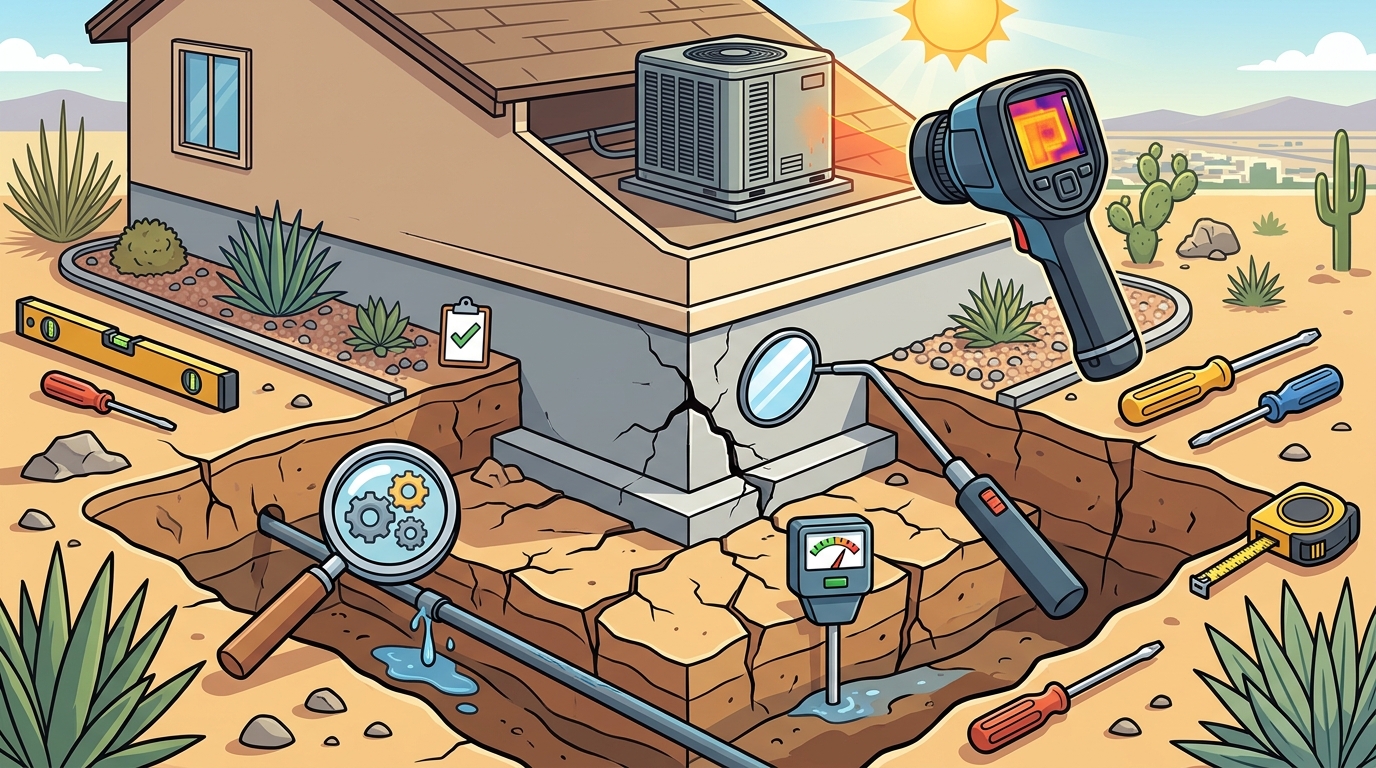
Foundation is the load-bearing base of the home that transfers weight to the ground. If the soil beneath is unstable, the entire structure becomes compromised. Inspectors often use a moisture meter to check the soil around the perimeter. Dry soil indicates potential future shrinkage, while overly wet soil suggests active swelling. You should also ask about the history of any previous foundation repairs. Las Vegas real estate trends show that homes with documented foundation work sell at a premium because buyers value the peace of mind.
Another key term to understand is slab jacking. Slab jacking is a repair method where concrete is pumped under a sunken slab to lift it back to its original position. If a home has undergone this procedure, verify that the warranty is transferable. This ensures you are not inheriting a problem that will recur without coverage. Always request a separate geotechnical report if the home is in a high-risk zone like Summerlin or Henderson, where soil composition varies significantly.
HVAC Systems in Extreme Heat
Las Vegas experiences over 310 days of sunshine annually, with summer temperatures regularly exceeding 100 degrees Fahrenheit. This climate puts an enormous strain on heating, ventilation, and air conditioning systems. An HVAC unit that is undersized or poorly maintained will fail prematurely, costing thousands in replacement. During the inspection, the professional will check the age of the unit, the condition of the refrigerant lines, and the efficiency of the air filter.
HVAC is the system responsible for regulating indoor temperature and air quality. In the desert, this system runs nearly year-round. Look for signs of rust on the outdoor condenser unit, which indicates corrosion from dust and sand. The inspector should also test the cooling capacity by measuring the temperature drop across the evaporator coil. A drop of less than 20 degrees Fahrenheit suggests the system is struggling to cope with the heat load.
Additionally, check the ductwork for leaks. Ducts often crack under the weight of heavy insulation or due to soil movement. Leaky ducts can waste up to 30% of conditioned air, driving up utility bills significantly. Energy efficiency guidelines from the Department of Energy emphasize that sealed ducts are essential for maintaining efficiency in extreme climates. If the ducts are old or poorly insulated, factor in the cost of sealing or replacement in your negotiation.
Irrigation and Water Damage Detection
Water is a scarce resource in Nevada, yet it is essential for maintaining the landscaping that adds curb appeal. However, irrigation systems are a common source of hidden damage. Leaking sprinkler heads or broken lines can saturate the soil around the foundation, leading to the very swelling issues mentioned earlier. This creates a vicious cycle of water damage and structural instability.
Inspectors will test the irrigation system by running each zone. Look for misting heads, which waste water and create slip hazards on walkways. Check for low spots in the lawn that indicate underground leaks. These areas may also attract pests like termites, which thrive in moist wood. WaterSense from the EPA recommends using smart controllers that adjust watering based on local weather conditions to prevent overwatering.
Another critical check is the perimeter drainage. The ground should slope away from the house to direct rainwater and irrigation runoff away from the foundation. If the grading is flat or slopes toward the home, water will pool against the concrete. This is a major red flag in Las Vegas homes. Ask the seller for records of any recent grading work or French drain installations. Proper drainage is the first line of defense against foundation damage.
Electrical Panel and Wiring Safety
Older homes in Las Vegas, particularly those built before the 1980s, may have outdated electrical systems that cannot handle modern power demands. The high usage of air conditioning and electric heating can overload circuits, leading to frequent breaker trips or fire hazards. An inspector will examine the electrical panel for signs of corrosion, improper wiring, and double-tapped breakers.
Double-tapped breaker is a condition where two wires are connected to a single breaker terminal not designed for it. This can cause overheating and potential electrical fires. If the panel is a Federal Pacific or Zinsco brand, it is known to be defective and should be replaced immediately. These brands were recalled due to failure to trip during overloads. NFPA electrical safety facts highlight that faulty electrical panels are a leading cause of home fires.
Also, check for aluminum wiring. Homes built between 1965 and 1973 often used aluminum instead of copper. Aluminum expands and contracts more than copper, leading to loose connections and arcing. If aluminum wiring is present, ensure that the outlets have CO/ALR ratings or that the home has been retrofitted with pigtails. Upgrading to copper wiring is a significant expense, so factor this into your budget if you find this issue.
Roof and Gutter System Integrity
The intense UV radiation in Las Vegas degrades roofing materials faster than in other regions. Asphalt shingles become brittle and crack, while tile roofs can suffer from broken tiles due to thermal expansion. Inspectors will look for curling shingles, missing granules, and cracked tiles. They will also check the flashing around chimneys and vents, which is a common entry point for leaks.
Gutters in Las Vegas serve a different purpose than in rainy climates. They are designed to channel the rare but intense monsoon rains away from the foundation. Clogged or damaged gutters can cause water to overflow and saturate the soil around the home. Check for rust, holes, and loose hangers. Ensure that downspouts extend at least five feet away from the foundation.
Consider the age of the roof. Most asphalt shingles last 15 to 20 years in the desert heat. If the roof is near the end of its lifespan, negotiate a credit for replacement. National Roofing Contractors Association guidelines suggest that roofs in high-UV areas may need replacement sooner than standard estimates. A new roof is a major investment, so knowing its condition is vital for your long-term financial planning.
Key Takeaways
- Foundation Risks: Expansive clay soil causes 40% more settling issues in Las Vegas homes compared to coastal areas.
- HVAC Strain: Units must handle 310+ days of sun; check for rust and a 20-degree temperature drop across coils.
- Water Management: Irrigation leaks can saturate foundations; ensure grading slopes away from the house.
- Electrical Safety: Avoid homes with Federal Pacific panels or aluminum wiring unless retrofitted.
- Roof Degradation: UV radiation shortens shingle lifespan to 15-20 years; inspect flashing and gutters closely.
- Professional Insight: Always hire a inspector familiar with Southern Nevada soil and climate conditions.
- Negotiation Power: Use inspection findings to request repairs or credits for major systems like HVAC and foundation.
Frequently Asked Questions
How much does a home inspection cost in Las Vegas?
The average cost for a standard home inspection in Las Vegas ranges from $400 to $600, depending on the size and age of the home. Additional specialized inspections for foundation, termite, or radon can add $200 to $500 to the total. National Association of Home Inspectors provides regional pricing benchmarks that can help you verify fair market rates.
What is the most common issue found in Las Vegas home inspections?
The most common issue is foundation cracking due to soil movement. Expansive clay soils expand when wet and shrink when dry, causing the concrete slab to shift. This leads to diagonal cracks in drywall and sticking doors. Addressing this early can prevent costly structural repairs later.
Do I need a separate termite inspection in Las Vegas?
While most standard inspections include a visual pest check, a dedicated termite inspection is highly recommended in Las Vegas. The warm climate supports active termite colonies year-round. A specialized inspector can detect mud tubes and damage that a general inspector might miss. National Pest Management Association data shows that termites cause billions in damage annually in the southwestern United States.
How does the desert climate affect roof lifespan?
The intense UV radiation and temperature fluctuations in Las Vegas degrade roofing materials faster. Asphalt shingles may last only 15 years instead of the standard 20-25 years. Tile roofs are more durable but can crack from thermal stress. Regular maintenance and inspections are crucial to extend the life of your roof.
What should I do if the inspection reveals foundation problems?
If foundation problems are found, hire a structural engineer for a detailed assessment. Use the engineer's report to negotiate with the seller for repairs or a price reduction. Do not proceed with the purchase until you have a clear plan for addressing the structural issues. BHHS Nevada properties can connect you with trusted structural engineers in the area.
Is radon testing necessary in Las Vegas?
Yes, radon testing is necessary. Nevada has some of the highest radon levels in the country due to its geology. Radon is a colorless, odorless gas that can accumulate in homes and increase lung cancer risk. EPA radon guidelines recommend testing all homes, regardless of foundation type, to ensure safety.
Secure Your Investment with Expert Guidance
Navigating the complexities of a Las Vegas home inspection requires local expertise and a keen eye for detail. Do not leave your biggest investment to chance. Partner with Berkshire Hathaway HomeServices Nevada Properties to find a home that meets your needs and withstands the desert climate. Our team of experienced agents and trusted inspectors can guide you through every step of the process. Contact us today to schedule your consultation and start your journey to homeownership with confidence.